Latest Articles

Counting Binary/Hexadecimal Palindromes

In my article “Counting Binary and Hexadecimal Palindromes” I derived formulas for counting binary palindromes and hexadecimal palindromes. For each type of palindrome, I derived two pairs of formulas: one pair to count n-digit palindromes, and one pair to count palindromes of n digits or less.

In this article, I will derive similar formulas to count binary/hexadecimal palindromes — multi-base palindromes I’ve shown to have an algorithmically defined structure.

Continue reading …

The Structure of Binary/Hexadecimal Palindromes

Binary/hexadecimal palindromes are integers that are palindromic in both binary and hexadecimal. Unlike binary/decimal palindromes, for example, they have a predictable structure. This means they can be generated directly, rather than searched for. So what is their structure?

Certainly they’re made up of the hexadecimal digits that are themselves palindromic in binary: 0, 6, 9, F; for example, F060F16 = 111100000110000011112 and 9F916 = 1001111110012. Each of these four hexadecimal digits maps neatly to a 4-digit binary palindrome, so any hexadecimal palindrome made from them is automatically palindromic in binary.

But there are other binary/hexadecimal palindromes, like 52516 = 101001001012 and 7020716 = 11100000010000001112, that contain hexadecimal digits that are not palindromic in binary. In this case, binary palindromes are produced with combinations of hexadecimal digits. It turns out there are a limited number of valid combinations, and that they’re localized — they span only two hexadecimal digits.

In this article, I’ll analyze binary/hexadecimal palindromes and describe their structure — a structure due to the relationship of the two bases, binary and hexadecimal.

Example Binary/Hexadecimal Palindromes

Example Binary/Hexadecimal Palindromes

Continue reading …

Counting Binary and Hexadecimal Palindromes

How many nonzero, n-digit, decimal number palindromes are there? These two formulas give the answer:

  • When n is even: 9·10n/2-1
  • When n is odd: 9·10(n+1)/2-1

How many nonzero, decimal number palindromes are there, consisting of n-digits or less? These two formulas give the answer:

  • When n is even: 2(10n/2 – 1)
  • When n is odd: 11·10(n-1)/2 – 2

So for example, there are 900 5-digit decimal palindromes, 9,000 8-digit decimal palindromes, 1,098 decimal palindromes of 5 digits or less, and 19,998 decimal palindromes of 8 digits or less.

In this article, I will derive similar formulas to count binary and hexadecimal number palindromes.

Continue reading …

Cycle Length of Powers of Five Mod Powers of Ten

In my article “Patterns in the Last Digits of the Positive Powers of Five” I noted that the positive powers of five modulo 10m cycle with period 2m-2, m ≥ 2, starting at 5m. In this article, I’ll present my proof, which has two parts:

  • Part 1 shows that the powers of five mod 2m cycle with period 2m-2, m ≥ 2, starting at 50.
  • Part 2 shows that the powers of five mod 10m cycle with the same period as the powers of five mod 2m, starting at 5m.

The highlight of my proof is in part 1, where I derive a formula to show that the period, or order, of 5 mod 2m is 2m-2. While it is in general not possible to derive a formula for the order of a number, I’ll show it is possible for the powers of five mod 2mdue to a hidden, binary structure I’ve uncovered.

Continue reading …

Binary Dates in 2010 and 2011

People have been tweeting about the upcoming dates that look like binary numbers. 10/10/10 seems to be a favorite, both because of its symmetry and because 101010 = 42 in decimal (you know, the answer to the ultimate question of life, the universe, and everything). Here are the nine dates in each year, interpreted as binary numbers, and with their decimal equivalents:

Continue reading …

Patterns in the Last Digits of the Positive Powers of Five

The positive powers of five — 5, 25, 125, 625, 3125, 15625, … — have a compact, repeating pattern in their ending m digits, in the powers of five from 5m on. For example: starting with 5, their last digit is always 5; starting with 25, their last two digits are always 25; starting with 125, their last three digits alternate between 125 and 625. These cycles come in lengths of powers of two.

Cycles in the Ending Digits of the Powers of Five

Cycles in the Ending Digits of the Powers of Five

I will show you why these cycles exist, how they are expressed mathematically, and how to visualize them.

Continue reading …

Seeing Powers of Five in Powers of Two and Vice Versa

The decimal representations of oppositely signed powers of two and powers of five look alike, as seen in these examples: 2-3 = 0.125 and 53 = 125; 5-5 = 0.00032 and 25 = 32. The significant digits in each pair of powers is the same, even though one is a fraction and one is an integer. In other words, a negative power of one base looks like a positive power of the other.

Powers of Two and Powers of Five that Look Alike

Powers of Two and Powers of Five that Look Alike

This relationship is not coincidence; it’s a by-product of how fractions are represented as decimals. I’ll show you simple algebra that proves it, as well as algebra that proves similar properties — in products involving negative powers.

Continue reading …

Cycle Length of Powers of Two Mod Powers of Ten

In my article “Patterns in the Last Digits of the Positive Powers of Two” I noted that the positive powers of two modulo 10m cycle with period 4·5m-1, starting at 2m. For example, the powers of two mod 10 cycle with period four: 2, 4, 8, 6, 2, 4, 8, 6, … . In this article, I’ll present my proof, which has two parts:

  • Part 1 shows that the powers of two mod 5m cycle with period 4·5m-1, starting at 20.
  • Part 2 shows that the powers of two mod 10m cycle with the same period as the powers of two mod 5m, starting at 2m.

Continue reading …

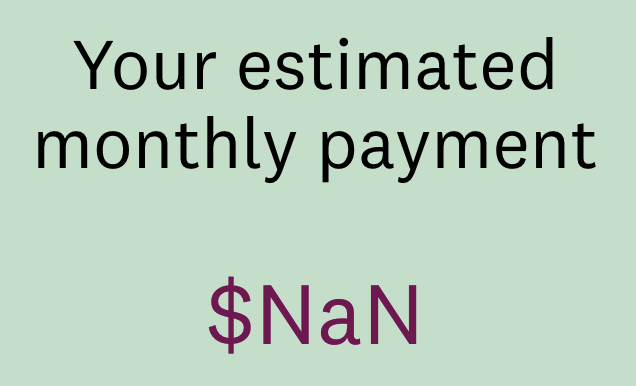
Floating-Point Error in the NPR Media Player

The NPR Media Player apparently uses floating-point numbers to represent timestamps, based on this image (click it to enlarge):

NaNs in NPR Media Player (thumbnail)

NaNs in NPR Media Player (click image to enlarge).

Continue reading …

My Custom Binary Themed Calendar for 2010

I found twelve free stock images — all with binary themes — and made a custom calendar for 2010. Here’s May:

My Custom Binary-Themed Calendar For 2010

My Custom Binary-Themed Calendar For 2010

Continue reading …

How to Find the Last Digits of a Positive Power of Two

A common exercise in number theory is to find the last digits of a large power, like 22009, without using a computer. 22009 is a 605-digit number, so evaluating it by hand is out of the question. So how do you find its last digits — efficiently?

Modular arithmetic, and in particular, modular exponentiation, comes to the rescue. It provides an efficient way to find the last m digits of a power, by hand, with perhaps only a little help from a pocket calculator. All you need to do is compute the power incrementally, modulo 10m.

In this article, I will discuss three methods — all based on modular exponentiation and the laws of exponents — for finding the ending digits of a positive power of two. The techniques I use are easily adapted to powers of any number.

Continue reading …

Patterns in the Last Digits of the Positive Powers of Two

The positive powers of two — 2, 4, 8, 16, 32, 64, 128, 256, … — follow an obvious repeating pattern in their ending digit: 2, 4, 8, 6, 2, 4, 8, 6, … . This cycle of four digits continues forever. There are also cycles beyond the last digit — in the last m digits in fact — in the powers of two from 2m on. For example, the last two digits repeat in a cycle of length 20 starting with 04, and the last three digits repeat in a cycle of length 100 starting with 008.

In this article, I will show you why these cycles exist, how long they are, how they are expressed mathematically, and how to visualize them.

Continue reading …